

Cost-effectiveness analysis of FMT (MRT) for the Treatment of CDI in Singapore

Cost-effectiveness analysis of Faecal Microbiota Transplantation for the Treatment of Clostridioides difficile infection (CDI) in Singapore
Teng, X. L. P., Toh, K. Y., Liu, L., Lum, L., Lee, W. J. J., Lim, J., & Wang, Y. B. (2024). Cost-effectiveness analysis of faecal microbiota transplantation for the treatment of Clostridioides difficile infection (CDI) in Singapore [Poster presentation]. Value Based Healthcare Conference 2024.
Aim. The study aims to determine if incorporating faecal microbiota transplantation (FMT) in the local treatment algorithm for Clostridioides difficile infection (CDI) is cost-effective.
Background. CDI is associated with significant morbidity and healthcare costs, compounded by its high recurrence rates. Compared with antibiotics, FMT has been shown to be more effective in treating patients with multiple recurrences and is associated with cost-savings to the healthcare system.
Methods. A Markov model was used to compare 4 treatment regimens to treat a population of hospitalised patients with initial CDI, of which patients were simulated to experience a likelihood of cure, recurrence and mortality with each infection episode. Treatment regimens were informed by clinical guidelines, with FMT used to treat patients with second or more recurrences in one regimen. Model inputs were obtained from published literature and cost effectiveness studies. Outcomes were measured in quality-adjusted life years (QALYs), costs and incremental cost-effectiveness ratios (ICERs). The analysis was conducted from the health system perspective, at a willingness-to-pay threshold of S$50,000 (approximately £30,000) per QALY.
Results. In the base case analysis, a treatment regimen of vancomycin for treatment of initial CDI, vancomycin taper-pulse for first recurrent CDI and FMT colonoscopy for subsequent recurrences dominated other treatment regimens which did not incorporate FMT. Despite a higher treatment cost with FMT, this was offset by a greater reduction in costs associated with re-hospitalisations. Sensitivity analysis demonstrated that this regimen remained cost-effective over all ranges of values sampled and was only not cost-effective when costs of FMT treatment is above $11,196 per CDI episode.
Conclusion. Despite the high treatment cost associated with FMT, a treatment algorithm incorporating is the cost-effective strategy in the management of CDI. This was due to the averted costs from subsequent recurrences.
Articles you might be interested in

Unity partners with AMILI to bring Asia's precision health science to Singaporeans
Unity partners with AMILI to bring Asia's precision health science to Singaporeans, with new Metabolic Health Probiotics available exclusively through Unity's Wellness retail pharmacies
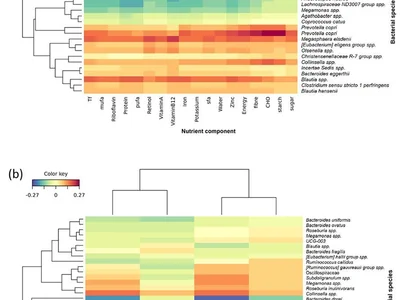
Association between exercise, nutrient and food with the Singaporean gut microbial composition
Gut (2021)

Weight Management and the Gut Microbiome
Did you know that a healthy gut microbiome is an essential part of your weight management journey? We have a mutualistic relationship with our gut whereby our health can benefit from a diverse gut microbiome.