

Progression of gut microbiome in preterm infants during the first three months
Progression of gut microbiome in preterm infants during the first three months
Li, F., Hooi, S. L., Choo, Y. M., Teh, C. S. J., Toh, K. Y., Lim, L. W. Z., Lee, Y. Q., Chong, C. W., & Ahmad Kamar, A. (2025). Progression of gut microbiome in preterm infants during the first three months. Scientific reports, 15(1), 12104. https://doi.org/10.1038/s41598-025-95198-1
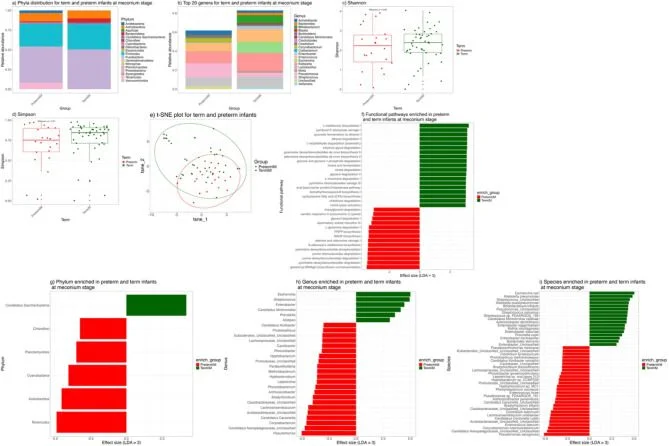
The colonization and evolution of gut microbiota early in life play a vital role in shaping a healthy, robust immune system for infant health, whether in combating short-term illness or improving long-term health outcomes. Early-life clinical practices may interrupt or disrupt the normal colonization process of the infant gut microbiota, thereby increasing disease susceptibility. In this prospective cohort study, we analyzed the gut microbiota of 46 term and 23 preterm infants using 16S rRNA gene metagenomic sequencing. Fecal samples were collected at six timepoints during the first three months of life. Notably, gestational age was the main factor contributing to differences in the meconium microbial composition. Intriguingly, our study unveiled a more homogeneous microbial composition in preterm infants with more abundant Bifidobacterium from the postnatal age (PNA) of one month. Concurrently, the beneficial bacteria Bifidobacterium and Lactobacillus gradually increased, and the potentially pathogenic bacteria Clostridium, Enterobacter, Enterococcus, Klebsiella, and Pseudomonas gradually decreased. Furthermore, our study underscored a link between decreased microbial diversity of preterm infants and exclusive breastfeeding and antibiotic exposure. Moreover, preterm infants with patent ductus arteriosus (PDA) exhibited reduced microbial diversity but higher abundances of Streptococcus oralis and Streptococcus mitis.