

Microbial features in Patients with Hepatocellular Carcinoma: A pilot cross-sectional study
Microbial features in Patients with Hepatocellular Carcinoma: A pilot cross-sectional study
Koh, T. K., Lee, G. H., Lim, L., Toh, K., Lee, J. W. J., Lim, J., & Chow, P. (2023, December 6–9). Microbial features in patients with hepatocellular carcinoma: A pilot cross-sectional study [Oral presentation]. Asian Pacific Digestive Week 2023, Bangkok, Thailand.
Objectives: Gut microbes may play a role in the pathogenesis of hepatocellular carcinoma (HCC) development. This study aims to characterize the microbial taxonomic and functional potential in patients with HCC using shotgun sequencing.
Materials and Methods: We collected stool samples from 75 subjects recruited from six tertiary centers in Singapore. Stool samples underwent shotgun sequencing and subsequent taxonomic and functional profiling using the BioBakery version 3 metagenomic pipeline. Putative microbial features associated with HCC were identified using multivariate regression analysis whilst adjusting for age, body mass index (BMI), concomitant hepatitis B, and cirrhosis.
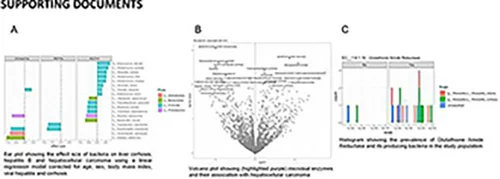
Results: Both patients with (n = 30) and without HCC (n = 45) were similar in age, sex, BMI, alcohol use, and hepatitis B infection. Fewer patients with HCC were cirrhotic (46.7% vs 75.6%, P = 0.02). We identified 14 microbial species (Fig. A) and 90 microbial enzymes (Fig. B) associated with HCC (P < 0.05, FDR < 0.2). All bacteria species positively associated with HCC were Firmicutes (Fig. A), such as Enterococcus faecalis, Streptococcus australis, and Weissella confusa. Forty-four bacterial enzymes were positively associated with HCC (Fig. B). One such key enzyme was glutathione amide reductase, mainly produced by W. confusa and Weissella cibaria (Fig. C).
Conclusion: Our study demonstrated significant differences in microbial taxonomic and functional profiles in patients with HCC, such as increased genetic potential for glutathione amide reductase which may potentiate overexpression of glutathione, which is associated with HCC proliferation, metastatic activity, and tumor resistance to anticancer therapies.