

The Making of a Super Poop Donor: Food and Lifestyle Links to a Resilient Microbiome
Tay, C., Lin, M., Tan, S. C., Lim, J., Knol, J., & Lay, C. (2026). The making of a super poop donor: Food and lifestyle links to a resilient microbiome [Poster presentation]. Microbiome Interactions in Health and Disease 2026, Hinxton, United Kingdom.
“Superpoopers” are individuals who produce faeces rich in beneficial microbes, making them ideal candidates for faecal microbiota transplantation (FMT) to help restore gut health and treat certain clinical conditions. We sought to characterize Superpoopers within Asia to uncover microbiome traits that support gut health and well-being.
In this study, we leveraged the AMILI’s population-scale microbiome health databank (N=1073) and identified a cohort of 97 Superpoopers, mainly Chinese, through stringent criteria: aged 21–55, non-smokers, not pregnant or breastfeeding, BMI <30, no recent antibiotic use, and no known gastrointestinal disorders. All participants had confirmed healthy cardiometabolic and inflammatory profiles based on haematological assessments and biochemical tests of liver and kidney functions. The absence of known pathogens was confirmed through diagnostic testing of stool, blood, and nasal swab samples. Detailed self-reported data were collected on sleep (PSQI), physical activity (GPAQ), diet (Malaysian Healthy Eating Index (MHEI)), mental well-being (K10, PSS), and bowel movement. Microbiome data were analysed in relation to dietary and lifestyle indicators.
Compared with the broader AMILI database, Super poop donors reported better quality diets, better sleep, higher levels of vigorous activities, and lower anxiety. Interestingly, overall microbiome diversity (alpha/beta) did not reveal significant differences between the Super poop donors’ dataset and the rest of AMILI database. Based on those insights, we more closely investigated the microbiome of a subset of those Super poop donors with the highest MHEI scores (N=22).
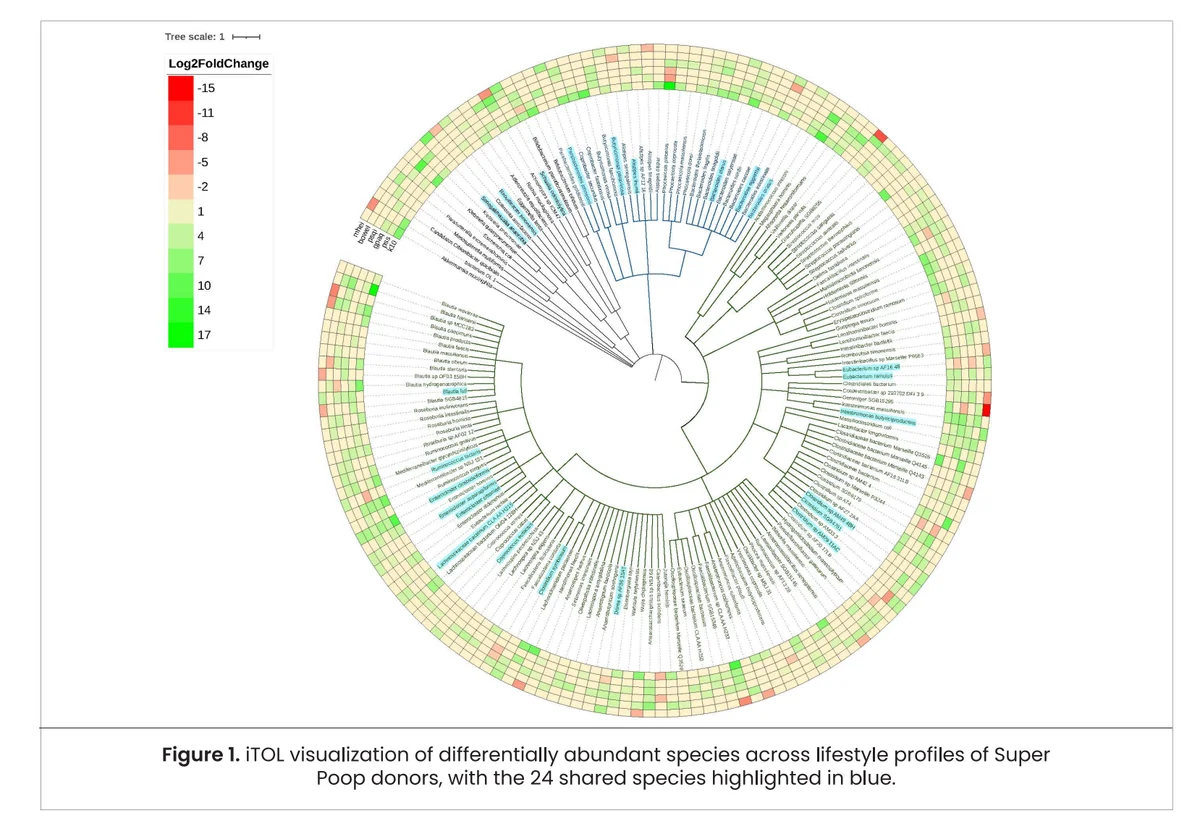
A collection of 24 species, mainly butyrate and short-chain fatty acid (SCFA) producers, was shared between the individuals with high MHEI scores (Fig. 1). Seven of these species showed significant associations with lifestyle and dietary factors, most strongly with vigorous physical activity and higher intake of specific fruits & vegetables, including avocado and nuts (Fig. 2). In parallel, microbial pathways for vitamin K biosynthesis were significantly enriched, highlighting functional benefits unique to diet quality.
Importantly, clinical health status alone was insufficient to decipher Superpooper’s microbiome signature; these enriched, health-associated species only appeared in combination with high dietary quality. Lifestyle factors reinforced these effects: physically active individuals with good sleep and mental well-being further exhibited microbial communities enriched in SCFA producers.
The Superpooper microbiome signature is not simply marked by the absence of disease alone, but underpinned by a healthy, plant-rich diet and supported by positive lifestyle behaviours. These findings highlight actionable food–microbe–lifestyle links, suggesting that a combination of sustained diet quality, and possibly targeted nutritional interventions, active living, and proactive mental health management are key to cultivating a microbiome associated with resilience and long-term health and wellness.