

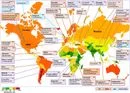
Populations that live in different regions of the world have varying taxonomic compositions. Geographical location has an impact on the microbial populations due to prominent differences in diet across geographic regions. The abundance of a certain enterotype varies from region to region, thus resulting in gut microbial differences.
So YES, geography does affect the microbiome! Read on to find out more.
What are enterotypes?
Along with DNA, our bodies also house billions of microbes, most of which are in our gut. An enterotype is essentially an individual’s ‘bacterial ecosystem’. They are clusters of bacteria in the gut that allow researchers to identify common traits among individuals. There are 3 types of gut-microbe populations – ‘enterotypes’ – namely: Bacteroides, Prevotella and Ruminococcus. Long-term diet is a major factor influencing an individual’s enterotype, which is associated with geography.
How do these enterotypes vary?
COUCH POTATO The Bacteroides enterotype (enterotype 1) consists of microbes that get energy from proteins, therefore individuals with a protein-rich diet are most likely to be classified as enterotype 1. People living in Western countries tend to have this enterotype because their long-term diet mostly consists of fat and proteins.
A-MAIZE-ING VEGGIESThe Prevotella enterotype (enterotype 2) consists of microbes that get energy from carbohydrates, so individuals with high-fibre whole-food diets and those who consume refined carbohydrates such as sweets are most likely to be classified as enterotype 2. This enterotype is prevalent in non-Western countries, where individuals eat a diet consisting of high levels of fibre.
GRAINY BUSINESSThe Ruminococcus enterotype (enterotype 3) is not as common as the other two. Individuals that have this enterotype consume a diet rich in resistant starches and dietary fibre. This enterotype is found mainly in rural areas.
The image below shows how microbial populations vary across different geographical regions.
Image credit: https://www.frontiersin.org/articles/10.3389/fmicb.2017.01162/full
Can enterotypes be changed?
It is possible for an individual’s enterotype to move along the scale from one to another depending on how they change their long-term diet. Short-term dietary changes cannot change one’s enterotype. Geographic relocation, if long-term, will have an impact on an individual’s enterotype due to the major changes in diet (if the individual changes their diet). In this way, geography does in fact have an impact on the microbiome.
Glossary
Taxonomic composition refers to the identity and number of microorganisms in an area. The taxonomic composition of the gut refers to all the microorganisms that reside in the gut that aid the gut in its processes.
Enterotypes are clusters of bacteria in the gut that allow researchers to identify common traits that bring people together. It is the stratification of gut microbiota.
References
- Gaulke C, Sharpton T. The influence of ethnicity and geography on human gut microbiome composition. Nat Med. 2018;24(10):1495-1496. doi:10.1038/s41591-018-0210-8
- Wakita Y, Shimomura Y, Kitada Y, Yamamoto H, Ohashi Y, Matsumoto M. Taxonomic classification for microbiome analysis, which correlates well with the metabolite milieu of the gut. BMC Microbiol. 2018;18(1). doi:10.1186/s12866-018-1311-8
- Senghor B, Sokhna C, Ruimy R, Lagier J. Gut microbiota diversity according to dietary habits and geographical provenance. Hum Microb J. 2018;7-8:1-9. doi:10.1016/j.humic.2018.01.001
- Willingham E. Which of the three gut types are you? | EarthSky.org. Earthsky.org. https://earthsky.org/human-world/which-of-the-three-gut-types-are-you. Published 2021.
- Stewart L. What Are Microbiome Enterotypes And Are They Real?. Atlas Biomed blog | Take control of your health with no-nonsense news on lifestyle, gut microbes and genetics. https://atlasbiomed.com/blog/what-are-enterotypes/. Published 2020.
- Gupta V, Paul S, Dutta C. Geography, Ethnicity or Subsistence-Specific Variations in Human Microbiome Composition and Diversity. Front Microbiol. 2017;8. doi:10.3389/fmicb.2017.01162
Articles you might be interested in

What Can a Gut Microbiome Test Reveal? A Real Case Study
A gut microbiome test cannot diagnose disease, but it can surface microbial patterns that provide a deeper layer of clinical information and understanding to care management. In this case, a reassuring wellness score sat on top of a microbiome that closely resembled inflammatory bowel disease (IBD). The individual was later found to have ulcerative colitis, and that single fact turned a set of scores into a clear, personalised picture.

Weight Management and the Gut Microbiome
Did you know that a healthy gut microbiome is an essential part of your weight management journey? We have a mutualistic relationship with our gut whereby our health can benefit from a diverse gut microbiome.

Prebiotics, Probiotics, and Personalised Nutrition
Prebiotics and probiotics are not terms that are strangers to any of us. Prebiotics and probiotics are most commonly consumed to boost gut health by improving the diversity of the gut microbiome. Research has shown that different individuals may have varying dietary responses due to our unique gut microbiota.